
XLPE compound shelf life, storage and pre-drying
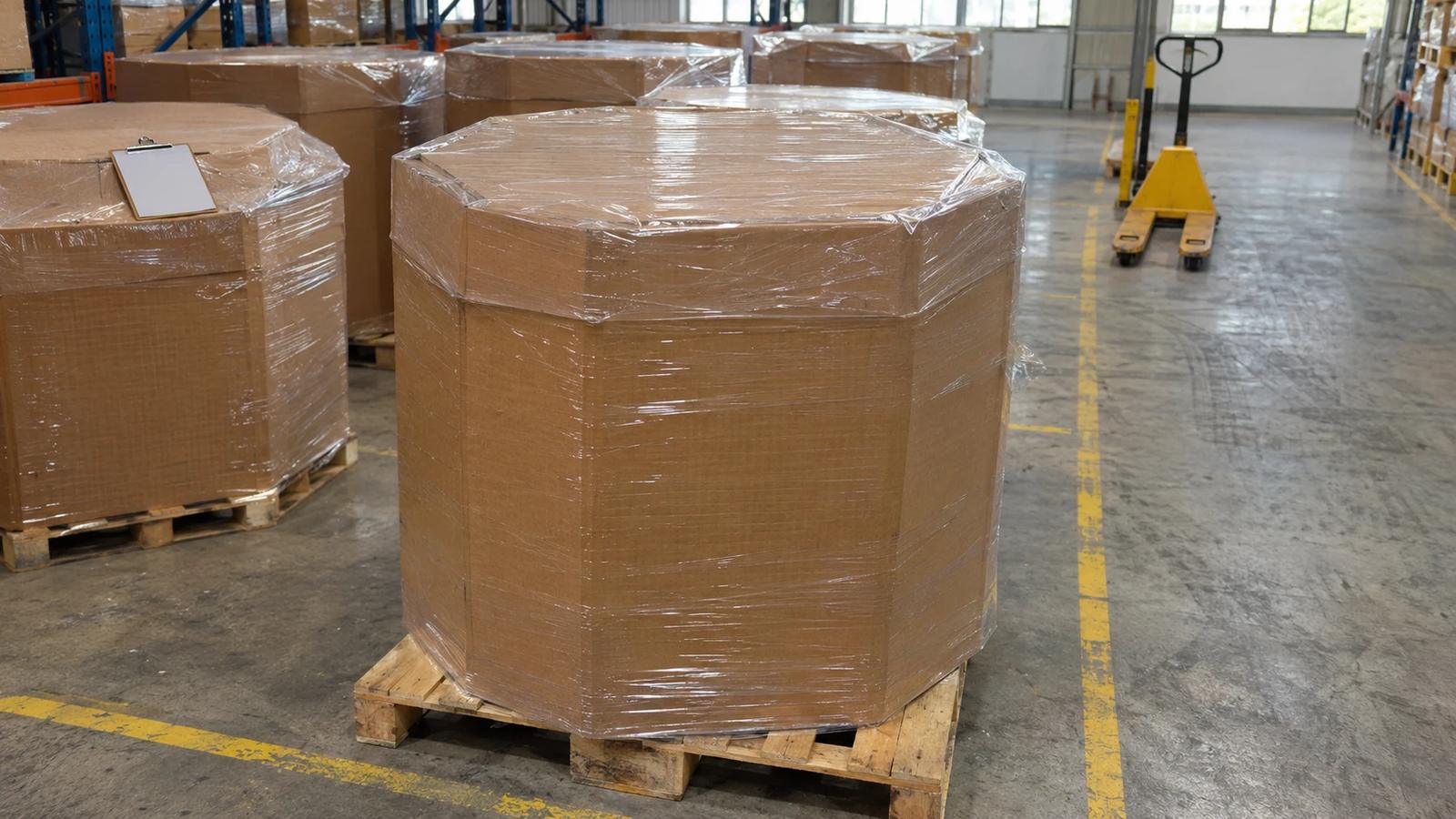
How long can a sealed octabin of XLPE insulation wait before it is extruded? At what temperature should it be kept, and does a semiconductive compound need drying first? These are not rules of thumb. The answers are printed in the processing, packaging and storage sections of the producer data sheets (one current sheet has no storage section), and they differ between insulation and semiconductive grades.
This guide sets out what the seven current Borlink™ data sheets (the Borealis 2026 editions) say, grade by grade, including where a sheet says nothing. Every figure below comes from those sheets, which are linked under References and on each product page.
Shelf life and storage temperature by grade
Shelf life is counted from the production date. “Screen” means semiconductive screen compound, and “Ed.” is the edition of the current data sheet.
| Grade | Shelf life | Storage temperature |
|---|---|---|
| LE4244S HV AC insulation, Ed.4 |
12 months | 10–35 °C; ambient up to 40 °C for up to 6 months |
| LS4201S HV AC insulation, Ed.6 |
24 months | 5–35 °C; ambient up to 40 °C for up to 6 months |
| LE4244EHV EHV AC insulation, Ed.4 |
12 months | 10–35 °C; ambient up to 40 °C for up to 6 months |
| LS4201EHV EHV AC insulation, Ed.3 |
Not stated | Not stated |
| LE0592S HV AC screen, Ed.5 |
18 months | 10–30 °C; no 40 °C allowance stated |
| LE0500 EHV AC screen, Ed.4 |
18 months | 10–30 °C; no 40 °C allowance stated |
| LE0550DC HVDC screen, Ed.1 |
18 months | 10–30 °C; no 40 °C allowance stated |
The current LS4201EHV sheet (Ed.3, May 2026) has no packaging and storage section at all. It states no shelf life, storage temperature, package or stock-rotation advice. We do not fill that gap with figures borrowed from another grade or an older edition. Its product compliance section still points to the latest SDS and PSIS on borealisgroup.com. If you are planning LS4201EHV stock, ask us before you plan long storage.
Shelf life is also one of the practical differences between the two HV insulation grades: 12 months for LE4244S against 24 months for LS4201S. Our LE4244S vs LS4201S comparison covers the others.
Before extrusion: conditioning, drying and package
| Grade and package | Before use |
|---|---|
| LE4244S Octabins |
Condition indoors to ambient temperature; no drying entry |
| LS4201S Octabins |
Condition indoors to ambient temperature; no drying entry |
| LE4244EHV Octabins |
Condition indoors to ambient temperature; no drying entry |
| LS4201EHV Package not stated |
No conditioning or drying entry |
| LE0592S Smallbins |
Drying recommended before extrusion; typical drying temperature 60 °C (4 h, dehumidified air); no conditioning entry |
| LE0500 Smallbins |
Typical drying temperature 60 °C (4 h, dehumidified air); no conditioning entry |
| LE0550DC Smallbins |
Typical drying temperature 60 °C (4 h, dehumidified air); no conditioning entry |
What the shelf-life figure assumes
On the six sheets that have a storage section, the shelf life comes with conditions attached:
- It runs from the production date. The clock starts when the batch is made, not when it reaches your plant. Check the production date of any lot before you buy; every lot we hold is traceable to its production batch.
- It applies to unopened original packages. The figure covers material still sealed in the producer’s packaging.
- The material must be kept dry and clean, within the stated range. That is 10–35 °C for LE4244S and LE4244EHV, 5–35 °C for LS4201S and 10–30 °C for the three semiconductive grades.
- Extremes count. Each of these sheets adds that storage conditions affect shelf life, and that extreme conditions influence the general quality and performance of the material.
The 40 °C clause on the LE4244S, LS4201S and LE4244EHV sheets is time-limited. It allows storage at ambient temperatures up to 40 °C for at most six months, and again only for unopened original packages kept dry and clean. The three semiconductive sheets state no such allowance.
These figures describe the compound before extrusion. They say nothing about the service life of a finished cable.
Conditioning before use
The LE4244S, LS4201S and LE4244EHV sheets say that, before use, the material shall be “conditioned indoors (production room) to reach ambient temperature”. The three semiconductive sheets do not include this sentence, and neither does the current LS4201EHV sheet.
First in, first out
Six of the seven sheets recommend proper stock rotation on the first-in, first-out principle: LE4244S, LS4201S, LE4244EHV, LE0592S, LE0500 and LE0550DC. The same six refer to the product’s Safety Data Sheet (SDS) / Product Safety Information Sheet (PSIS) for more information on storage. LS4201EHV Ed.3, with no storage section, has neither sentence. All seven sheets say the latest SDS, PSIS and other product liability documents are published on the Borealis website.
Clean handling, from package to hopper
Cleanliness is where storage and processing meet. All four insulation sheets say the compound’s cleanliness and product consistency result in superclean cable insulation. They add that Borealis assures the compound’s cleanliness level through its quality management system and verifies it at several process steps against strict specifications, using its own proprietary analysis methods. The same four sheets call careful, very clean handling of the insulation essential to a good and reliable cable.
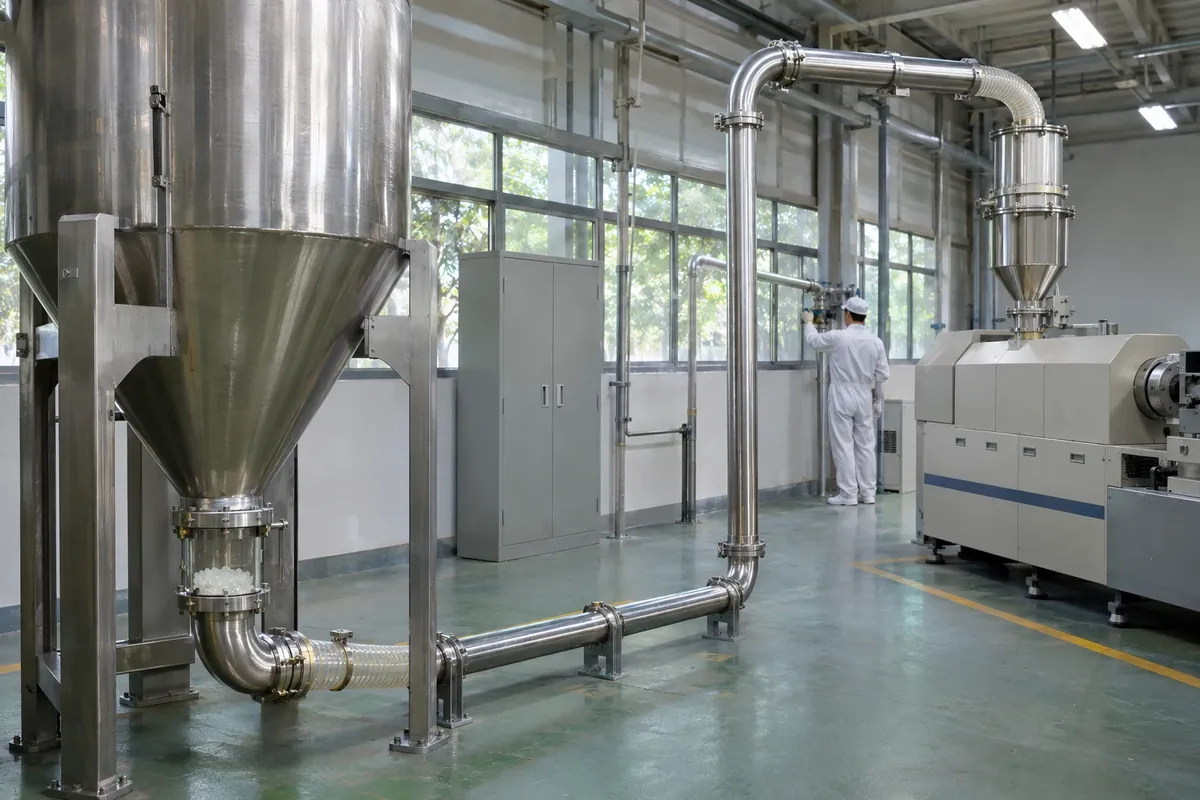
All seven sheets ask for material handling in closed systems and in clean-room conditions. Only the strength of the wording differs:
- LE4244S, LS4201S, LS4201EHV, LE0592S, LE0500 and LE0550DC: handling should be conducted this way.
- LE4244EHV: handling should preferably be conducted this way.
This is why we keep packages sealed until dispatch: what reaches your closed system is the material as the producer packed it. For why it matters electrically, see why superclean insulation matters.
Drying semiconductive compounds
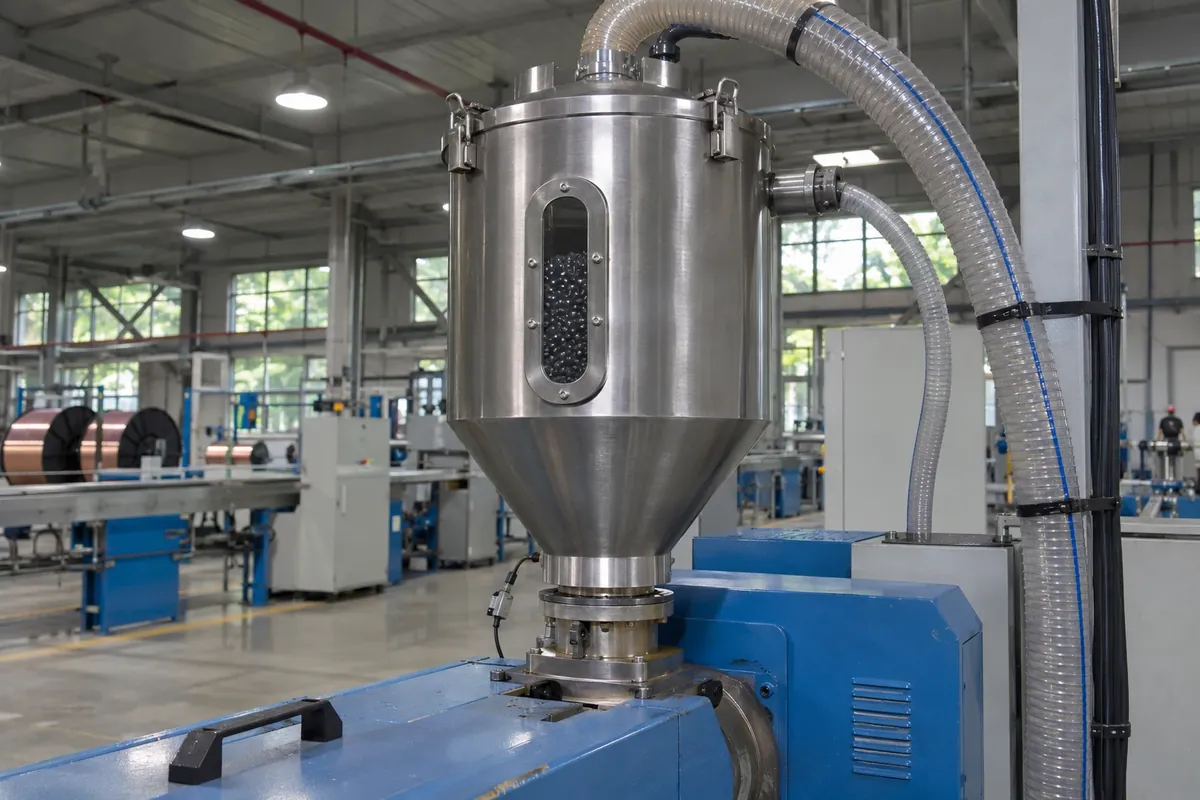
The three semiconductive data sheets give a typical drying temperature of 60 °C, with a footnote that reads 4 h with dehumidified air.
- LE0592S goes further: its text recommends that the compound is dried prior to extrusion.
- LE0500 and LE0550DC give the drying setting in their processing tables but add no separate recommendation sentence.
- The four insulation sheets have no drying entry.
For the term itself, see pre-drying in our glossary. For what the screens do in the cable, see semiconductive screen compounds.
Melt temperature, screen-pack and moisture
The same processing sections give typical settings to check against your line:
- Melt temperature (typical value/range): 125–135 °C for all four insulation grades; 120–135 °C for LE0592S and LE0500; 120–130 °C for LE0550DC.
- Screen-pack: all seven sheets recommend a screen-pack on the extruder for improved melt homogenisation.
Each sheet also prints a typical moisture content, measured at the time of production (ISO 15512). These are typical values that the sheets say should not be used for specification work, so do not read them as drying targets or incoming-inspection limits:
- All four insulation grades and LE0592S: < 200 ppm
- LE0500: < 100 ppm
- LE0550DC: 100 ppm (printed without a “<”)
How we store stock in Shanghai
Our Shanghai warehouse works to the same producer guidance:
- Sealed original packaging: octabins and smallbins kept unopened until dispatch.
- Climate-controlled: dry, clean storage within the temperature range on each grade’s data sheet where one is given.
- FIFO rotation: first-in-first-out stock rotation protects shelf life.
- Batch traceability: every lot traceable to its production batch, with a COA available per batch on request.
Tell us the grade, the volume and when you plan to extrude, and we will confirm availability and send the current data sheets. Request a quote.
References
- PDF · Borlink™ LE4244S product data sheet · Ed.4, 6 March 2026
- PDF · Borlink™ LS4201S product data sheet · Ed.6, 5 May 2026
- PDF · Borlink™ LE4244EHV product data sheet · Ed.4, 6 March 2026
- PDF · Borlink™ LS4201EHV product data sheet · Ed.3, 5 May 2026 (no packaging and storage section)
- PDF · Borlink™ LE0592S product data sheet · Ed.5, 6 March 2026
- PDF · Borlink™ LE0500 product data sheet · Ed.4, 6 March 2026
- PDF · Borlink™ LE0550DC product data sheet · Ed.1, 7 April 2026
- BRAND · Borealis — producer website · Where the data sheets point for the latest SDS and PSIS
Related products
- Borlink™ LE4244S · Insulation
- Borlink™ LS4201S · Insulation
- Borlink™ LE4244EHV · Insulation
- Borlink™ LS4201EHV · Insulation
- Borlink™ LE0592S · Semiconductive
- Borlink™ LE0500 · Semiconductive
- Borlink™ LE0550DC · Semiconductive