
Kraton G1730
EP and SEPS grades for base oil modification, gels and adhesives.
Product form
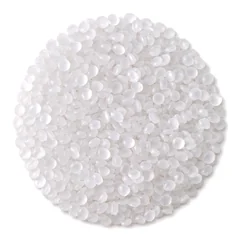
Illustrative image
Typical values
| Tensile strength, MPa | 20 |
|---|---|
| Elongation at break, % | >800 |
| Hardness, Shore A | 61 |
| Specific gravity | 0.9 |
| Brookfield viscosity (25wt%), mPa.s | 2000 |
| MFR 200°C/5kg | 3 |
| MFR 230°C/5kg | 11 |
| Styrene/rubber ratio | 20/80 |
| Diblock, % | <1 |
| Physical form | Dense |
| Polymer structure | SEPS linear |
Same series
Related articles
Basics
Chemicals glossary: SBC, resin, rosin and test terms
Plain explanations of terms on polymer and resin data sheets: SBC types, hydrocarbon and rosin resins, EVA, APAO, softening point, color, cloud point.
Basics
Pressure-sensitive adhesive basics: tack, peel and shear
What tack, peel and shear mean, how rubber-based hot-melt and solvent PSAs are built, and what the tackifier does in tapes and labels.
Selection
SEPS, SEEPS or SEBS: midblocks, oil gels and elasticity
SEPS, SEEPS and SEBS are all hydrogenated SBCs. How their midblocks differ and what that means for oil, gels, elasticity and low-temperature behavior.
Unless stated as limits, values shown are typical values and are not a specification guarantee. Please confirm availability and the current specification of a grade when you inquire. Brand and product names belong to their respective owners.
Tell us the grade or application, and we reply with availability and pricing.